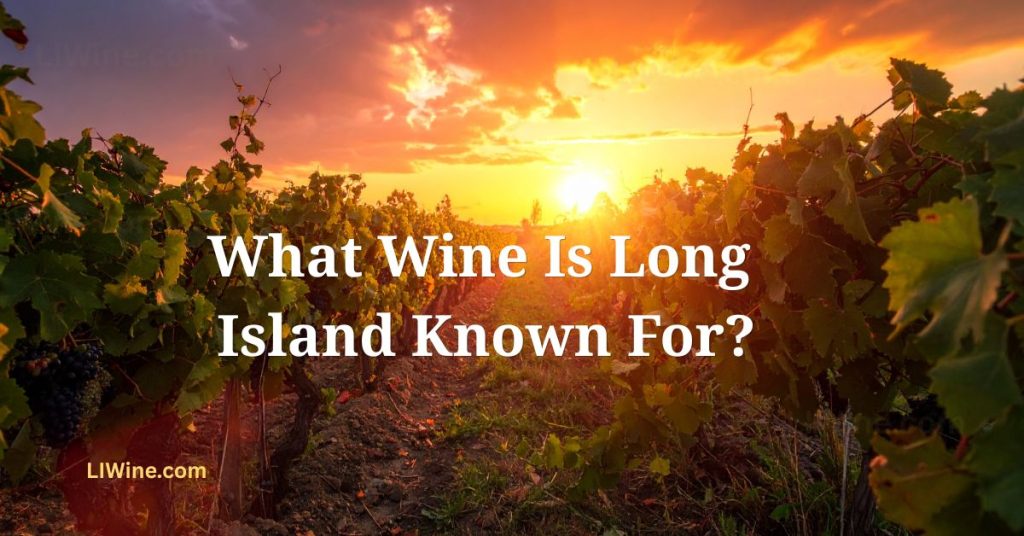
Long Island is best known for Bordeaux-style wines, especially Merlot, Cabernet Franc, and Cabernet Sauvignon. The region’s maritime climate and glacial soils create ideal growing conditions for these red grape varieties, earning Long Island its reputation as “New York’s answer to Bordeaux.” But the story does not end there. With more than 25 grape varieties planted across its vineyards, Long Island also produces acclaimed Chardonnay, traditional-method sparkling wines, vibrant rosés, and a growing number of adventurous bottlings that are redefining what East End wine can be.
The Flagship: Merlot
If one grape put Long Island wine on the national map, it is Merlot. Unlike the mild, often forgettable California Merlots that fell out of fashion after the “Sideways” effect, Long Island Merlot thrives in the region’s cool maritime conditions. The Atlantic Ocean moderates temperatures, resulting in wines with ripe but balanced fruit, savory complexity, and lively acidity.
The variety’s defining moment came in January 2013, when Bedell Cellars’ 2009 Merlot was served at President Barack Obama’s second inaugural luncheon, paired with hickory-grilled bison in the National Statuary Hall at the U.S. Capitol. It marked the first time a New York State wine had been poured at a presidential inauguration, putting Long Island on the national stage as a serious wine region. Separately, Wolffer Estate’s Perle Chardonnay was served at an Obama-Merkel event, giving two Long Island wineries a place at presidential tables.
Today, Merlot accounts for roughly 30% of Long Island’s total vineyard acreage, making it the most widely planted red grape on the island.
Cabernet Franc and Cabernet Sauvignon
Alongside Merlot, Cabernet Franc, and Cabernet Sauvignon are pillars of Long Island’s red wine identity. Cabernet Franc, in particular, has found a natural home in the region’s terroir. It ripens reliably in Long Island’s growing season, which is roughly three weeks longer than the rest of New York State, thanks to the tempering influence of the surrounding waters.
Many winemakers offer single-variety bottlings of both grapes, while others blend them together in the tradition of Bordeaux’s Left and Right Bank wines. These Bordeaux-style red blends are a hallmark of Long Island winemaking. Wineries combine Merlot, Cabernet Franc, Cabernet Sauvignon, and sometimes Malbec, Petit Verdot, or Carmenère to create complex, layered wines with depth and character.
Chardonnay
Chardonnay is Long Island’s most important white grape and one of the region’s strongest performers. The maritime climate, with its cool ocean breezes and long, moderate growing season, allows Chardonnay to develop bright acidity and mineral-driven character that sets it apart from warmer-climate expressions of the grape.
Styles range widely across the region. Some winemakers craft rich, barrel-fermented Chardonnays with notes of toast and butter, while others lean into stainless-steel fermentation to showcase the grape’s natural citrus and stone-fruit flavors.
Sparkling Wine
One of Long Island’s most exciting categories is traditional-method sparkling wine. Using Pinot Noir and Chardonnay, the same grapes behind Champagne, several North Fork producers are crafting Brut-style sparklers with aromas of brioche, lemon curd, and toast. The region’s climate, soil composition, and proximity to the ocean give these wines a bright acidity and freshness that make them a natural fit for the style.
Sparkling wine production is a growing focus for the region, and Long Island sparklers are increasingly recognized for their quality and distinctiveness.

Rosé
Rosé is practically synonymous with summer on Long Island, and local wineries have embraced the style wholeheartedly. The Hamptons, in particular, have become a destination for rosé lovers, with producers like Wolffer Estate and Channing Daughters releasing rosé blends that capture the breezy, sun-drenched spirit of the South Fork.
Many Long Island rosés benefit from the cooling influence of the Atlantic, which helps retain the acidity and freshness that make the style so appealing. Whether crafted from Merlot, Cabernet Franc, or proprietary blends, these wines are made for warm-weather sipping alongside the region’s celebrated seafood.
Sauvignon Blanc and Other Whites
Long Island’s Bordeaux connection extends to white grapes as well. Sauvignon Blanc performs beautifully in the region’s sandy, well-drained soils, producing wines with crisp acidity and a distinctive saline quality that comes from the ocean’s influence on the vineyards.
Beyond Sauvignon Blanc, adventurous producers are finding success with a range of other white varieties. Chenin Blanc at Paumanok Vineyards has gained a devoted following. Albariño, Tocai Friulano, Gewürztraminer, and Riesling round out a diverse portfolio of white wines that reflect the experimental spirit of the region.
Emerging and Adventurous Varieties
One of the things that sets Long Island apart from many Old World wine regions is its freedom to experiment. There are no regulations dictating which grapes winemakers can plant, and many are taking full advantage. The result is a growing list of lesser-known varieties that are beginning to define a new chapter in Long Island wine.
Channing Daughters Winery in the Hamptons has been a leader in this space, working with Northern Italian varieties like Teroldego, Ribolla Gialla, and Pinot Grigio made in the Ramato (skin-contact) style. These orange wines and unconventional bottlings add depth and diversity to the region’s offerings.
Other forward-thinking producers are exploring Pétillant Naturel (Pét-Nat), a rustic style of sparkling wine, and experimenting with grapes like La Crescent and Lemberger. McCall Wines has earned a reputation as a destination for Pinot Noir lovers, offering multiple bottlings from the historic Corchaug Estate on the North Fork.
Why Long Island’s Terroir Matters
Understanding what wine Long Island is known for starts with understanding its land. The region’s terroir is defined by several key factors:
Maritime Climate: Surrounded by the Atlantic Ocean, Long Island Sound, and Peconic Bay, the vineyards enjoy a moderate, maritime climate that is often compared to Bordeaux. The region receives roughly 2,600 hours of sunshine per year and about 3,300 Growing Degree Days (GDD), slightly warmer than Bordeaux’s 3,000 GDD.
Glacial Soils: The soils of Long Island were formed by the advance and retreat of glaciers during the last Ice Age, roughly 21,000 years ago. Two great spines of glacial moraine left behind well-drained deposits of sand, gravel, and loose rock. These free-draining soils are ideal for viticulture, preventing waterlogging despite the region’s 42 inches of annual precipitation.
A Long Growing Season: Atlantic breezes keep the region temperate, extending the growing season by at least three weeks compared to upstate New York. This gives grapes more time to ripen fully while retaining natural acidity.
Lower Alcohol Wines: Thanks to the ocean’s cooling influence, many Long Island wines clock in at a moderate 11 to 12.5% alcohol by volume, with lighter bodies, fresh fruit flavors, and a savory, food-friendly character.
Two AVAs, Two Personalities
Long Island’s wine country is divided between two sub-AVAs, each with its own personality:
North Fork of Long Island AVA (established 1986): Home to the majority of the region’s vineyards, the North Fork is sheltered from the Atlantic by Peconic Bay. It is warmer, sunnier, and produces wines with riper fruit flavors, fuller bodies, and sometimes a touch more alcohol. This is where you will find the region’s most celebrated Merlots, Cabernet Francs, and Bordeaux-style blends.
The Hamptons, Long Island AVA (established 1985): Cooler and more exposed to the Atlantic, the Hamptons produces wines with higher acidity, lighter bodies, and zesty, refreshing profiles. Rosé, white wines, and Italian varieties thrive here.
A Region on the Rise
Long Island’s wine industry has grown from a single vineyard planted in 1973, when Louisa and Alex Hargrave established the first vinifera vines on the North Fork, to approximately 60 wineries producing a wide range of wines across more than 3,000 acres of vineyard. The region continues to evolve, with each vintage bringing new experiments, new accolades, and new reasons to explore what Long Island wine has to offer.
Whether you are drawn to the region’s flagship Merlot, its elegant Chardonnay, its celebratory sparkling wines, or its adventurous new bottlings, Long Island’s wine scene has something for every palate. The best way to discover it? Visit the tasting rooms, meet the winemakers, and taste for yourself.
Ready to explore Long Island wine country? Check out our winery guides, upcoming events, and itinerary planner to start planning your next trip to the North Fork or the Hamptons.
© 2026 by LIWine.com All rights reserved. No part of this document may be reproduced or transmitted in any form or by any means, electronic, mechanical, photocopying, recording, or otherwise, without prior written permission.
Disclaimer: This article is for informational purposes only and reflects publicly available information about Long Island’s wine region as of the date of publication. LIWine.com is not affiliated with any individual winery mentioned. Please drink responsibly. Visitors should confirm hours, availability, and tasting policies directly with wineries before visiting.



Leave a Reply
You must be logged in to post a comment.